Whole-House Customization Avoidance Guide: 8 Key Details for Flawless Installation

Most custom cabinet failures stem from overlooked trivial details. This practical guide covers measurement, material selection, contracts and after-sales service to build beautiful, long-lasting storage cabinets.
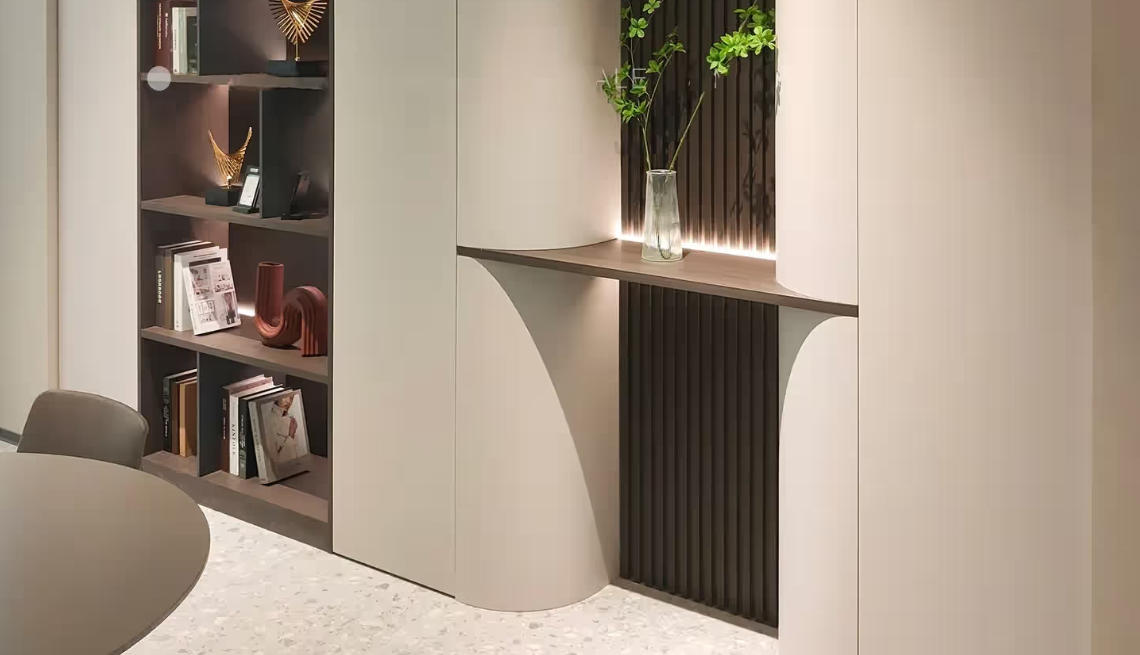
Leave 3–5mm gaps against walls, ceilings and floors to accommodate thermal expansion and ease installation.
Avoid baseboards and cornices in early design to avoid cutting finished decor later.
Align cabinets with power outlets to prevent blockages.
Use adjustable shelves for wardrobes and bookcases for flexible storage.
Custom drawer depth and load capacity with premium hardware to prevent sagging.
Reserve swing space for hinged doors; pick smooth, durable tracks for sliding doors.
Pre-wire sensor lights and strip lights to avoid messy exposed wires.
Inspect edge sealing: premium sealing is smooth with no glue overflow or burrs; poor sealing peels and releases formaldehyde.
Choose backboards ≥9mm thick for moisture resistance and stability, critical for wardrobes and kitchen cabinets.
Opt for branded hardware (Blum, Hettich) and ask for official warranty certificates.
Add moisture-proof pads for kitchen and bathroom cabinets; aluminum cabinets resist dampness well.
Floor-to-ceiling cabinets expand vertical vision and ease cramped small rooms.
Select push-to-open or hidden handles for minimalist looks; rounded exposed handles prevent bumps.
Match cabinet color swatches with wall and floor tiles before finalizing.
Equip L-shaped corners with rotating racks and pull-out organizers to utilize dead space.
Check wall verticality and floor flatness before installation to avoid crooked cabinets and uneven gaps.
Cover all screw holes with matching caps or stickers.
Use color-matched trim strips where cabinets meet walls for seamless transitions.
Inspect door alignment, drawer glide and tight hardware on-site for immediate adjustments.
Prioritize ENF or F4-star panels and keep official test reports before signing contracts.
Adopt formaldehyde-free glue and water-based paint to cut toxic fumes.
Ventilate rooms after installation; extend airing time for enclosed tatami spaces.
Write down all extra fees (irregular cutting, special hardware, extended panels) in black and white.
Sign off on fully dimensioned design drawings before production.
Confirm warranties: 5 years for cabinets, 2 years for hardware, plus clear after-sales response time.
Round cabinet edges and install anti-pinch drawer dampers in kids’ rooms.
Lower hanging zones in wardrobes so seniors can reach items without bending.
Leave bottom clearance for pet food storage and resting, reducing scratch damage on cabinet doors.
Side panels exposed to view are usually not included in package prices — confirm costs upfront.
Cheap packages limit panel and hardware options with steep surcharges for upgrades or expansions.
Standard fittings are low-grade; negotiate upgrades to premium hardware proactively.
The refinement of custom cabinets lies in small details. Verify plans thoroughly before signing, attend installation inspections, and keep contracts, drawings and test reports safe. You can then avoid renovation mishaps and own attractive, practical, high-quality whole-house storage.
下一篇:
没有了!
Copyright © 2026 佛山市德勒严选家居科技有限公司 备案号:粤ICP备2026077842号-1